

In a fast-paced world, training risks becoming a catalogue product, a standardised service with no real added value for users, but simply an experiential “product” that can be replicated and scaled thousands of times.
Authentic training, on the other hand, is not limited to transferring skills, providing slogans and rules of conduct, but aims to bring awareness, relationships and change. It aims at reasoning, intellectual curiosity and the construction of real skills, whether relational, technical or commercial. This article explores what it means to design training courses that respect people, context and real objectives, going beyond format and focusing on relationships.
The training market
In recent years, the training market has experienced exponential growth. Webinars, online courses, master's degrees, workshops, distance learning or face-to-face teaching, hybrid courses: the offer is wide, often accessible to everyone, sometimes well packaged, especially if standardised. Training packages are reduced to a few hours of coaching and a series of downloadable handouts and video guides to be followed privately.
It is different when you want to work with your team or on yourself and it is no longer enough to feel trained, you want to be transformed. Therefore, content must not only be acquired, but also integrated and, above all, adapted to specific needs.
The risk of ‘casual & standard’ training is that it provides tools that are learned but never used because the effort required to adapt the acquired skills prevents their practical application. Why does this happen?
Because training is too often thought of as a product, not a process. The aim is to create courses that are valid for a wide audience in order to generate cash flow, rather than to generate change. Catalogue training, which does not take into account the specificities of the group, does not dialogue with the corporate culture, does not generate real change, is experienced as an obligation, not as an opportunity.
From my point of view, however, training must be original, it must arise from listening, develop in the relationship and lead to concrete change. Authentic training is also context, language, atmosphere and intention. It is not just about content and information material. What are the pillars on which a “tailor-made” training project is based?
Its pillars are preliminary listening, tailor-made design, the training relationship, with a clear path that generates measurable impact. Authentic does not simply mean adapted. It means consistent, meaningful, transformative, original and true.
The role of the trainer
In an original and authoritative approach, the trainer becomes a facilitator of awareness, a builder of context, and an activator of resources. Often, by creating opportunities for discussion and dialogue, a virtuous circle of sharing internal knowledge and skills is triggered, thus not only acquiring new ones from outside but also strengthening shared values.
The characteristics of an authentic trainer are the ability to listen, to continuously adapt, almost a “fine tuning” of the training process, an empathetic approach, sensitivity and methodological precision. Every exercise, content and discussion becomes an experience, and the classroom, whether real or virtual, is made up of people who share and learn, rather than “enduring” the training hours.
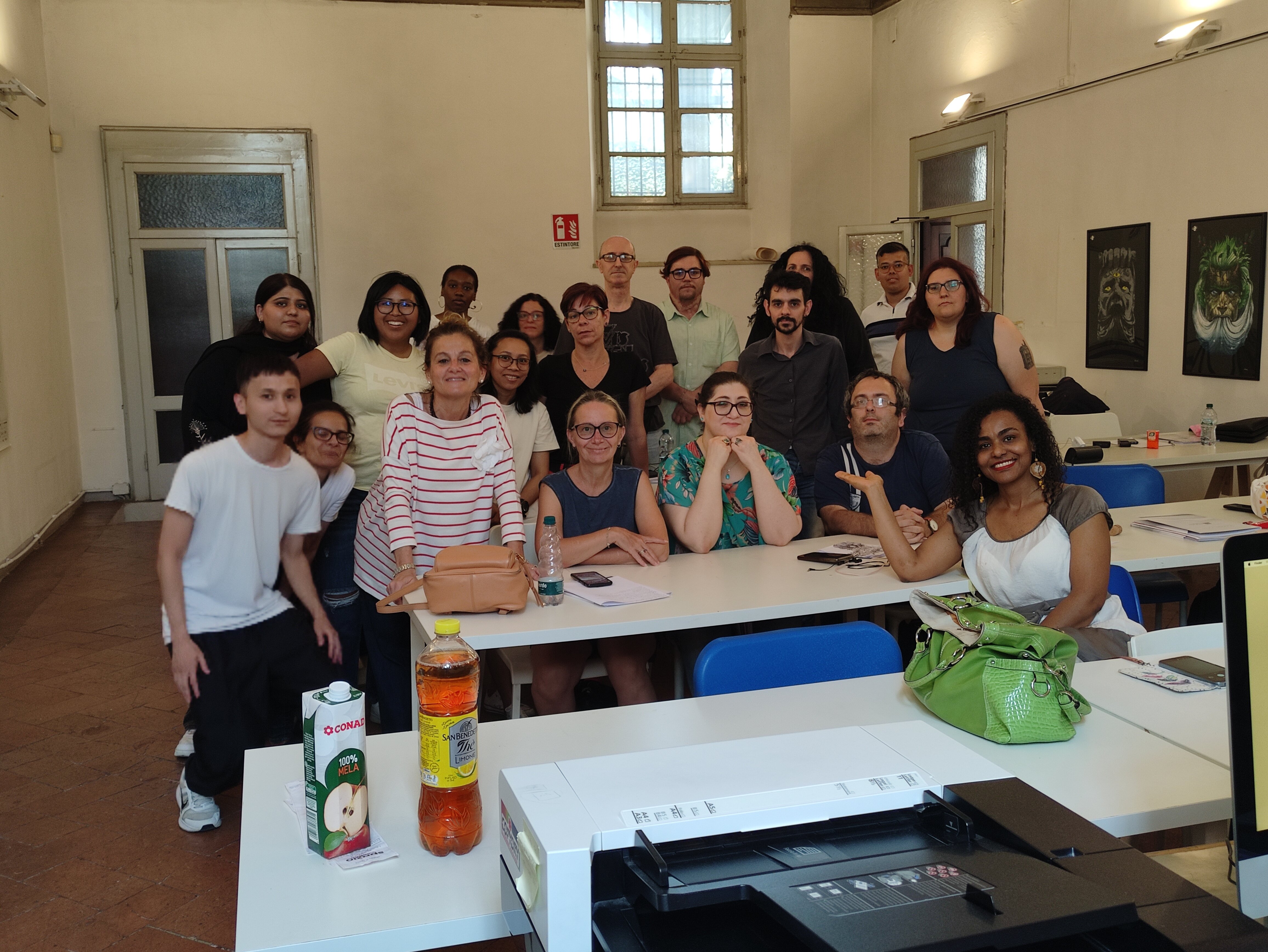
Some real cases I have dealt with have shown me how authentic training and tailor-made consulting have had a significant impact. In a small service company, a training course combined technical content and relational moments, improving clarity, trust and collaboration. For a trade association, a group of entrepreneurs followed a blended course on marketing strategy. A shared culture was created in the area, generating a sense of belonging and greater operational effectiveness.
When it is authentic, training is not just an operational tool. It becomes a decisive lever for strengthening corporate culture, building teams, facilitating change, generating meaning and belonging, building solid professional relationships and developing conscious leadership.
Training with authenticity means choosing to invest in people, context and relationships. It means starting with the person to arrive at the method, and not vice versa. It means designing with care, facilitating with empathy, building with consistency and believing that training is not content to be delivered, but an experience to be lived.
Authentic training cannot be sold or bought, it is built. If you want to design an authentic training programme for your organisation, let's talk about it. Find out more on my Services page.